Six Years of Scale
How did we build emotional connection with the brand?
A challenger brand with almost no local recognition needed people to feel something for it, not just recognize the logo.
Turn customers into advocates — an always-on community, UGC and CSR program running alongside paid media, not instead of it.
A recurring content engine built from real customers, and a CSR program that reached over 5 million people without a product pitch.
- 2017–2023
Photography Academy — UGC Content Engine
A recurring user-generated-content program that turned real customers into a content source, rather than relying only on paid creative.
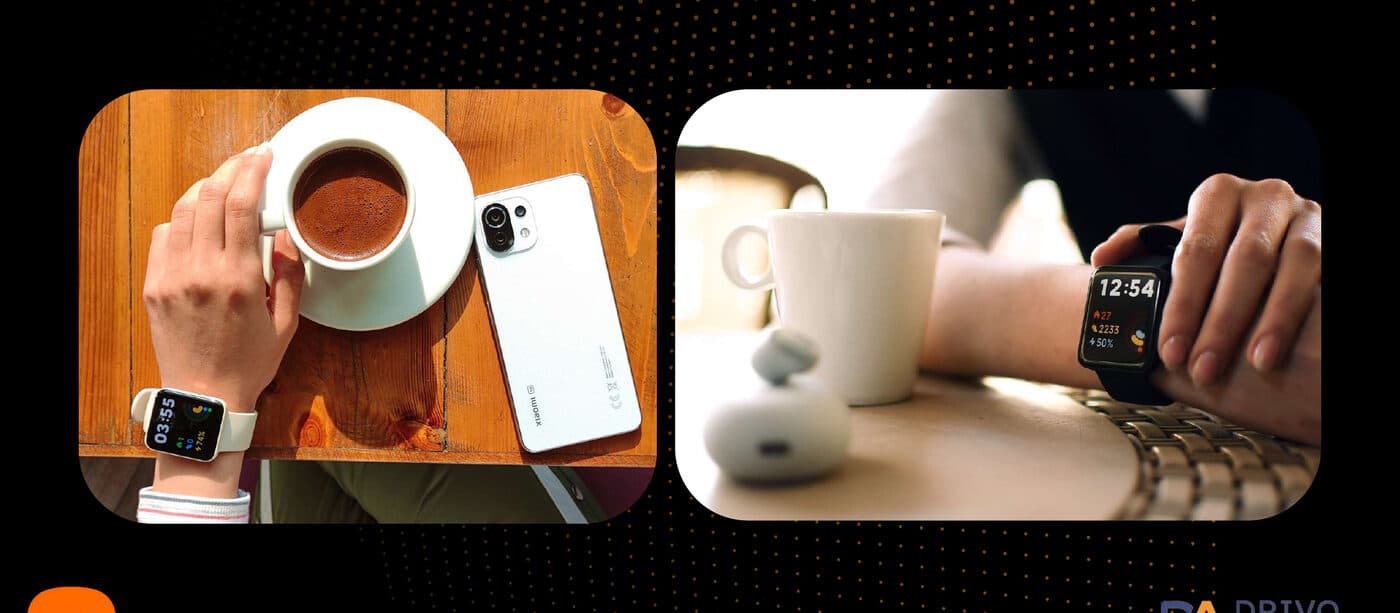
Xiaomi Photography Academy — user-generated product photography - 2021
CSR — Children's Mental Health Campaign
Xiaomi Community Egypt visited local communities to support children's mental health, reaching over 5 million people without a product pitch.
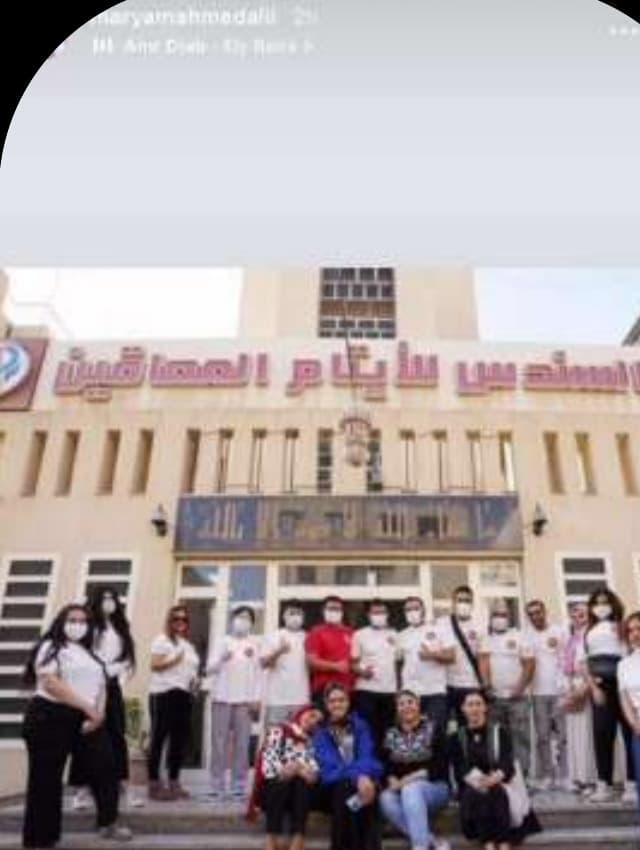
Xiaomi Community Egypt — children's mental health CSR visit - March 2022
Mother's Day Community Campaign
An always-on social moment offering real customers seasonal value — the kind of presence that compounds into brand trust over years, not single campaigns.
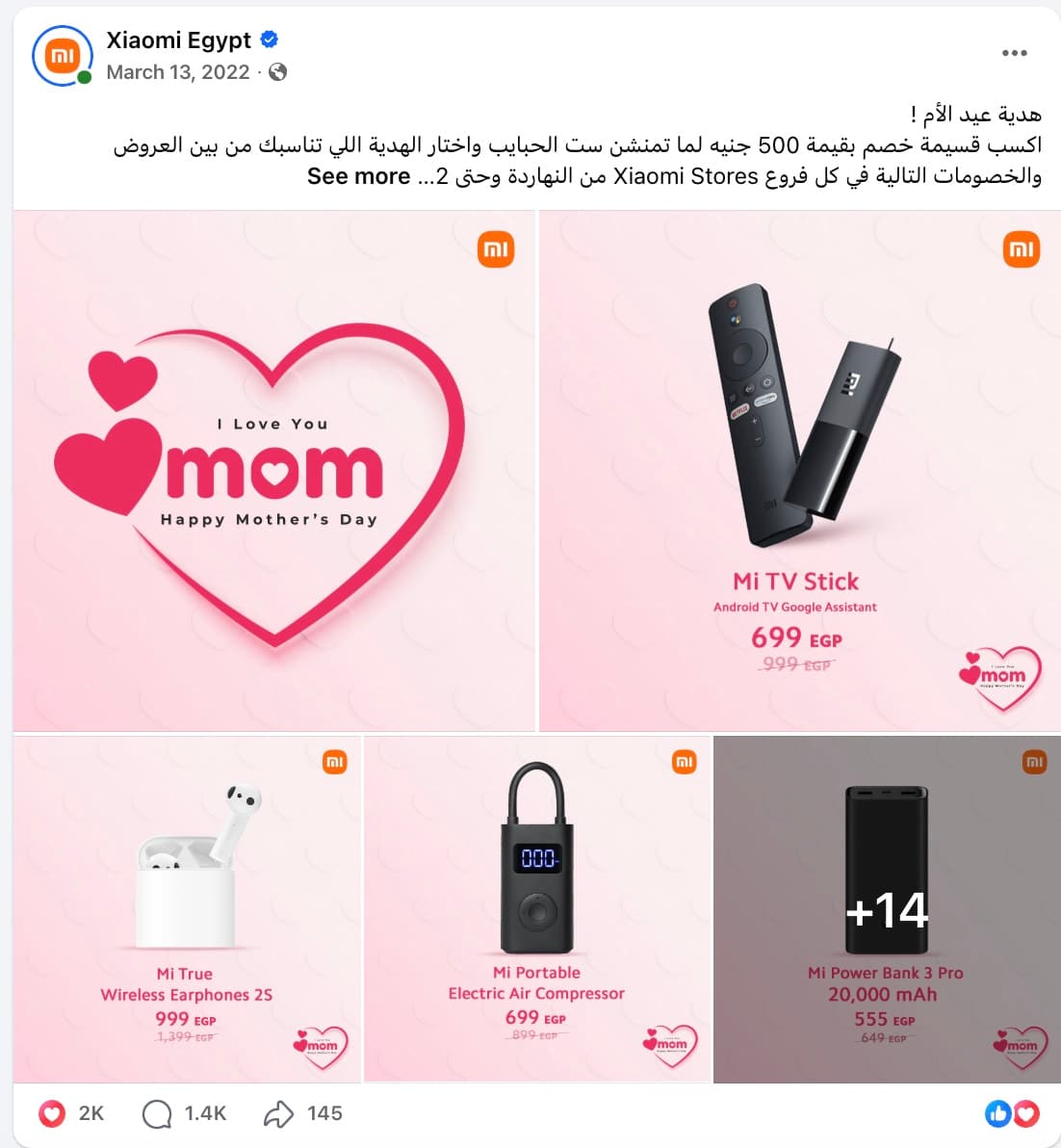
Xiaomi Egypt — Mother's Day always-on social campaign
Xiaomi's Egypt story didn't start with a big campaign — it started with a six-year decision to be present everywhere a customer already was, on a scale small enough to feel personal. The Photography Academy turned everyday customers into a recurring stream of real content instead of relying on studio production alone. CSR work — most visibly a children's mental health campaign run through Xiaomi Community Egypt — reached over 5 million people with no product attached to the message. Always-on social moments, like seasonal gift guides, kept the brand present between product launches rather than only during them.
Community compounds — it doesn't spike.
Brand equity at this scale isn't won with a single campaign — it compounds over years of consistency across owned, earned and paid channels, reinforced by a community that creates content on the brand's behalf.
How did we scale Xiaomi into a market leader?
Visibility alone wasn't the goal — six years of activity needed to convert into a defensible #2 market position.
Run three product tiers at once — Mi flagship, Redmi mass-market, POCO gaming — each with its own ambassador, launch format and audience, rather than one message for everyone.
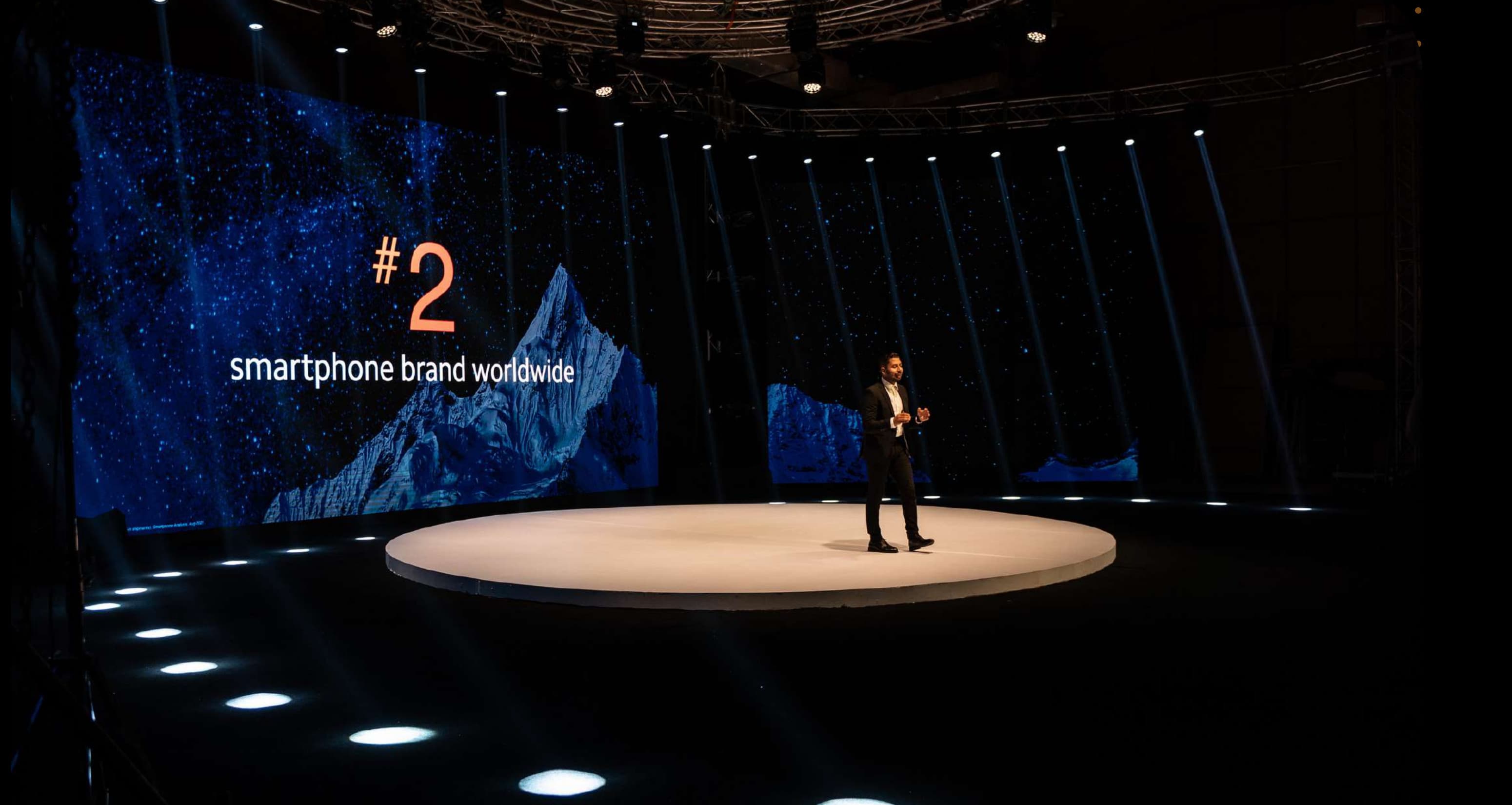
Xiaomi grew into the #2 smartphone brand in Egypt, with a Xiaomi 11T launch event declaring #2 worldwide on stage — the same six years also produced Redmi's 105M+-reach influencer program and POCO's largest gaming launch in Egypt.
- 2019
Mi 9T Launch Event
The earliest evidenced flagship launch of the tenure — a modest, single-market ballroom event that set the baseline for everything that followed.
- November 2020
"See Egypt Through Xiaomi's Eyes" (شوف مصر بعيون شاومي)
Before the Mi 10T launch or the Tamer Hosny partnership were public, the phone's 108MP camera needed proof, not a spec sheet. Traveled personally to Luxor and Aswan, while other Photography Academy members shot in Alexandria, Dahab and Siwa — five videos on the Mi 10T's camera alone, doubling as Egypt tourism promotion and the platform's first real demonstration of the device's image quality.
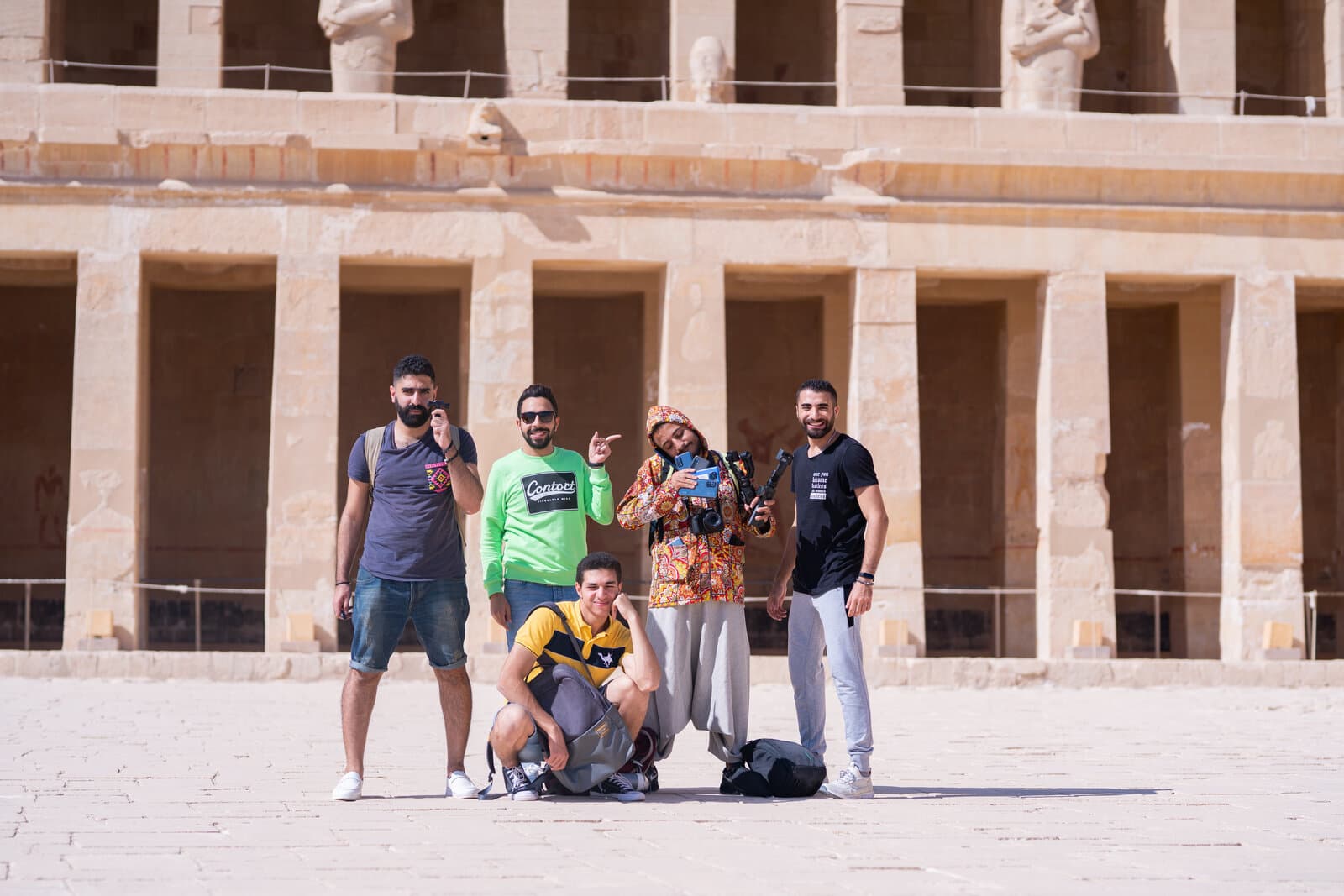
On location at Hatshepsut Temple — "See Egypt Through Xiaomi's Eyes" - November 29, 2020
Signing Day with Tamer Hosny
Two days before the public reveal, the ambassador deal was signed at AlSafy Group's offices — the relationship's actual starting point, not just its announcement.
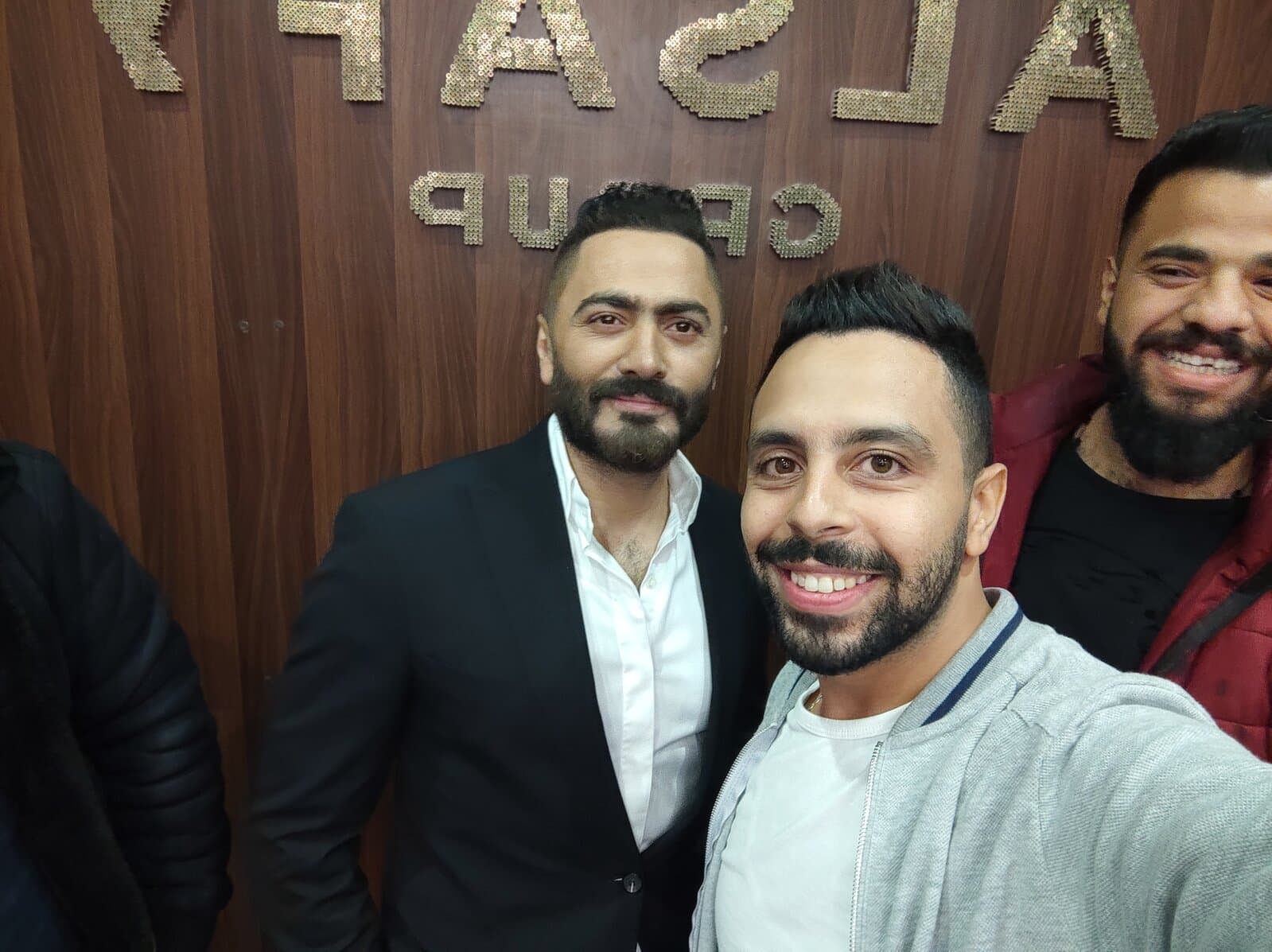
Signing day with Tamer Hosny — November 29, 2020 - December 1, 2020
Tamer Hosny Signed as Brand Ambassador
Xiaomi Egypt announced Tamer Hosny as brand ambassador — the partnership that anchored every major campaign moment for the next two years.
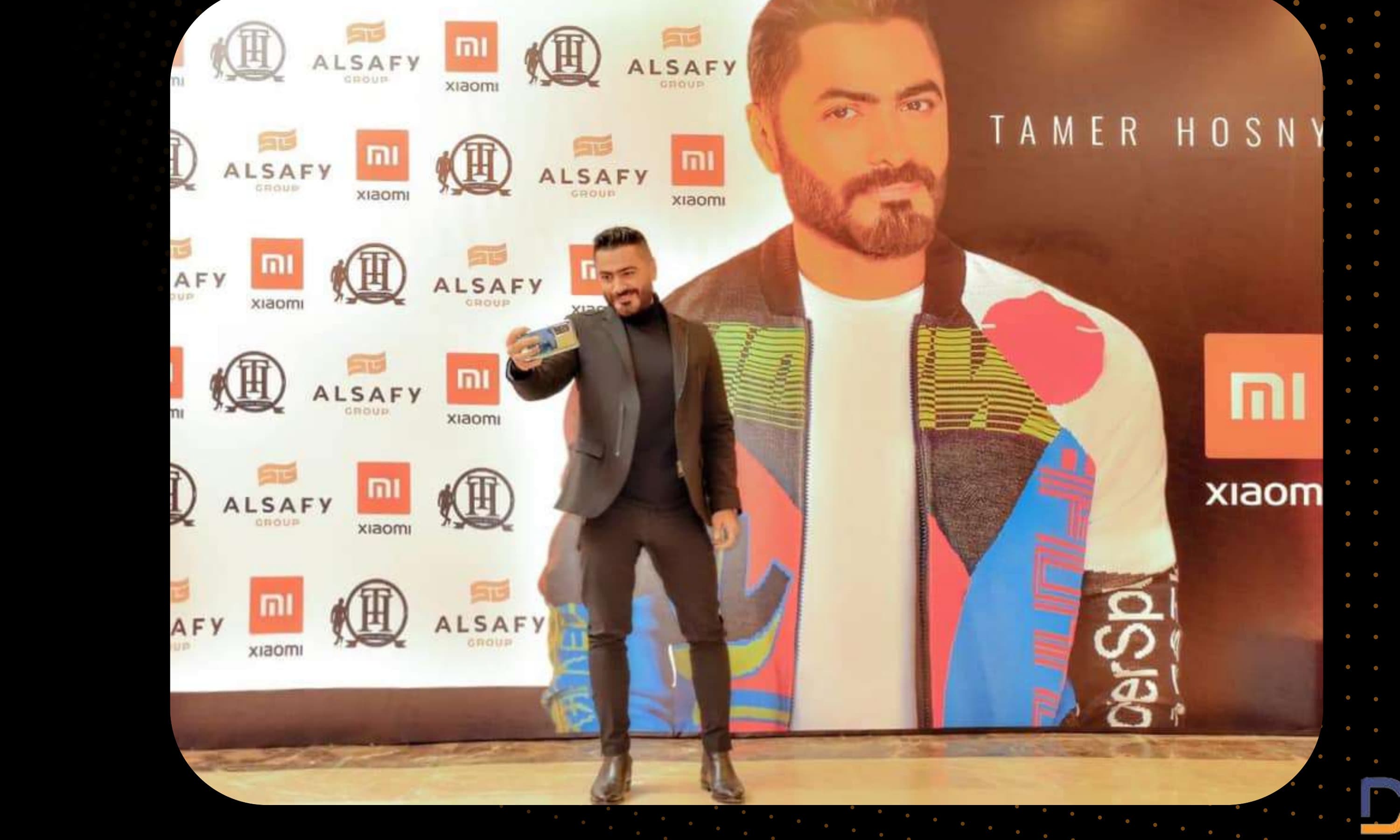
Tamer Hosny signs as Xiaomi brand ambassador - December 1, 2020
Mi 10T & Mi 10T Pro Launch
The Mi 10T Series launched the same day the ambassadorship was announced, pairing the celebrity reveal directly with a flagship product moment.
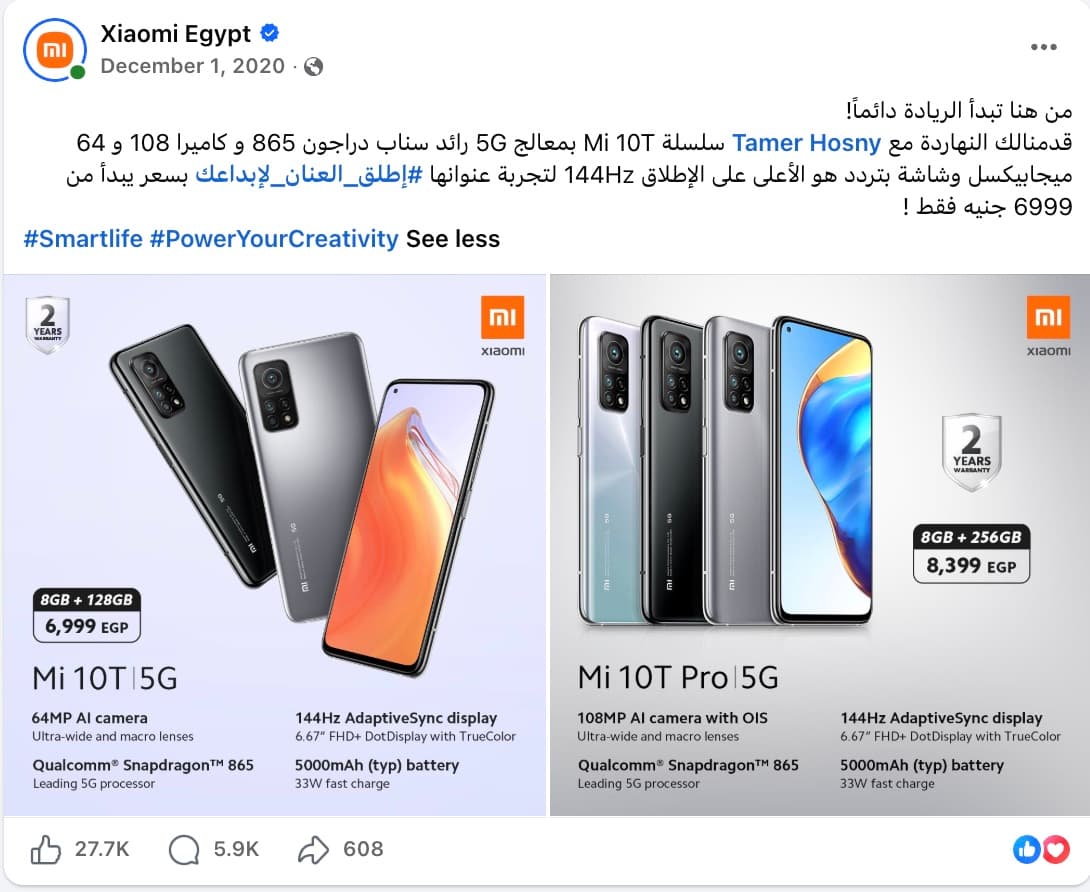
Mi 10T / Mi 10T Pro launch — same day as the ambassador reveal - December 1, 2020
Ambassador Reveal Reaches 146K Likes
The announcement post itself became a reach event — proof the ambassador partnership landed with the audience, not just with the brand.
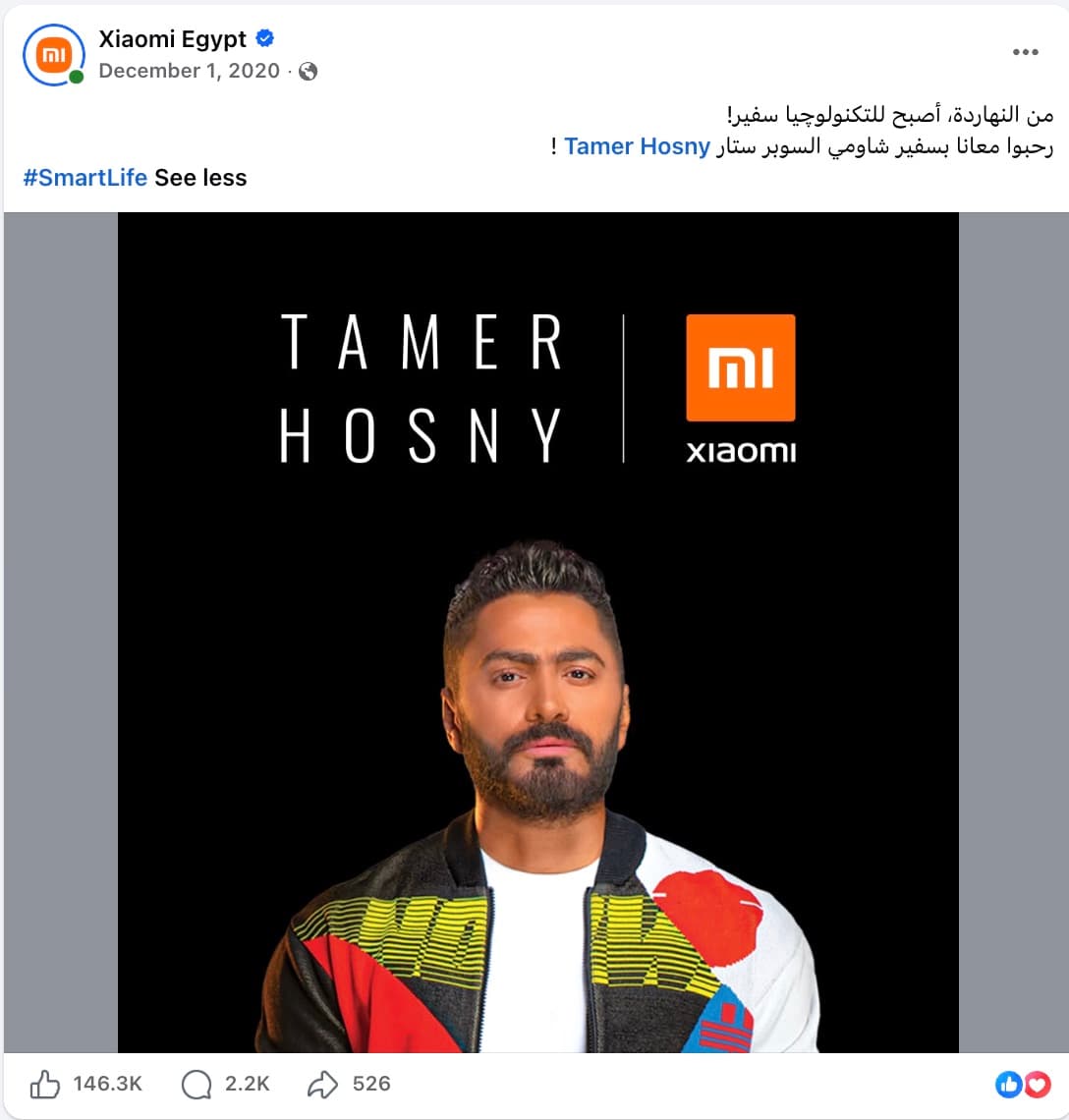
Xiaomi Egypt Facebook announcement — 146.3K likes - 2020
Xiaomi × Sharmoofers — Redmi "I Am Winner"
A mass-market Redmi campaign built around the Sharmoofers title track, carried across billboards, branded buses and metro takeovers nationwide.
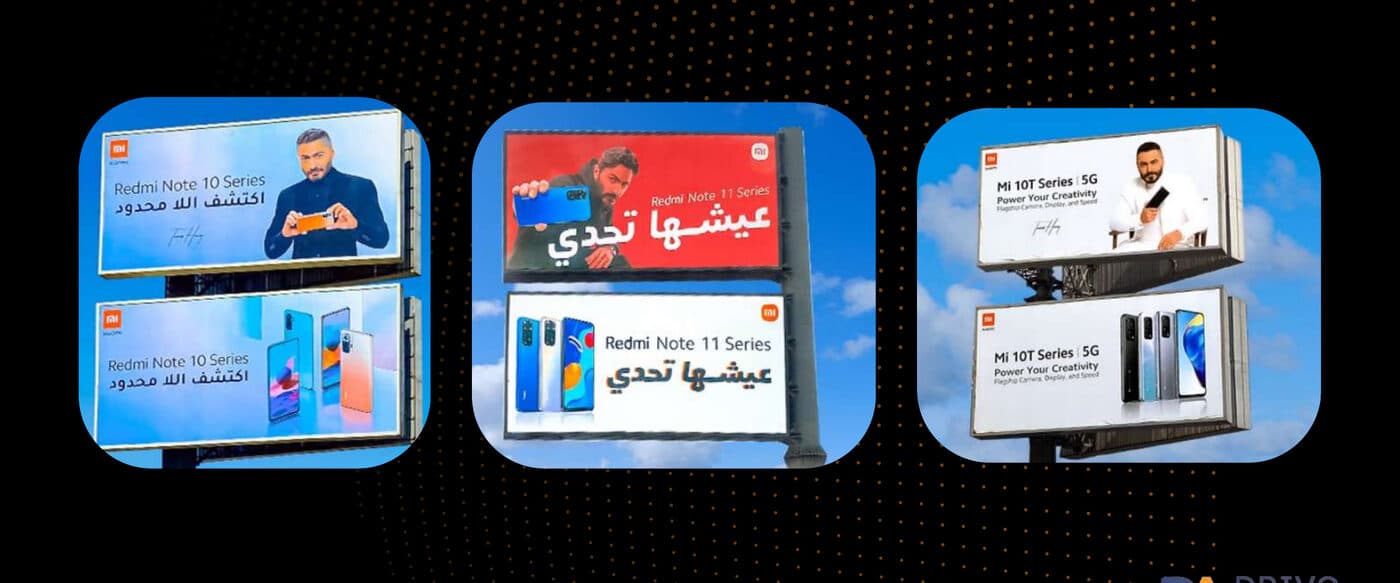
Redmi × Sharmoofers "I Am Winner" — outdoor placements, Cairo - 2021
Xiaomi 11T Launch — "#2 Smartphone Brand Worldwide"
A single speaker, alone on a stage, declaring a global ranking — the clearest visual expression of six years of compounding scale.
Xiaomi 11T Series Launch Event, 2021 - 2022
POCO X3 GT Gaming & Launch Event
Organized as Egypt's largest gaming event for POCO — an all-day gaming and esports production at the Conrad Ballroom, POCO's answer to owning gaming culture directly rather than advertising around it.
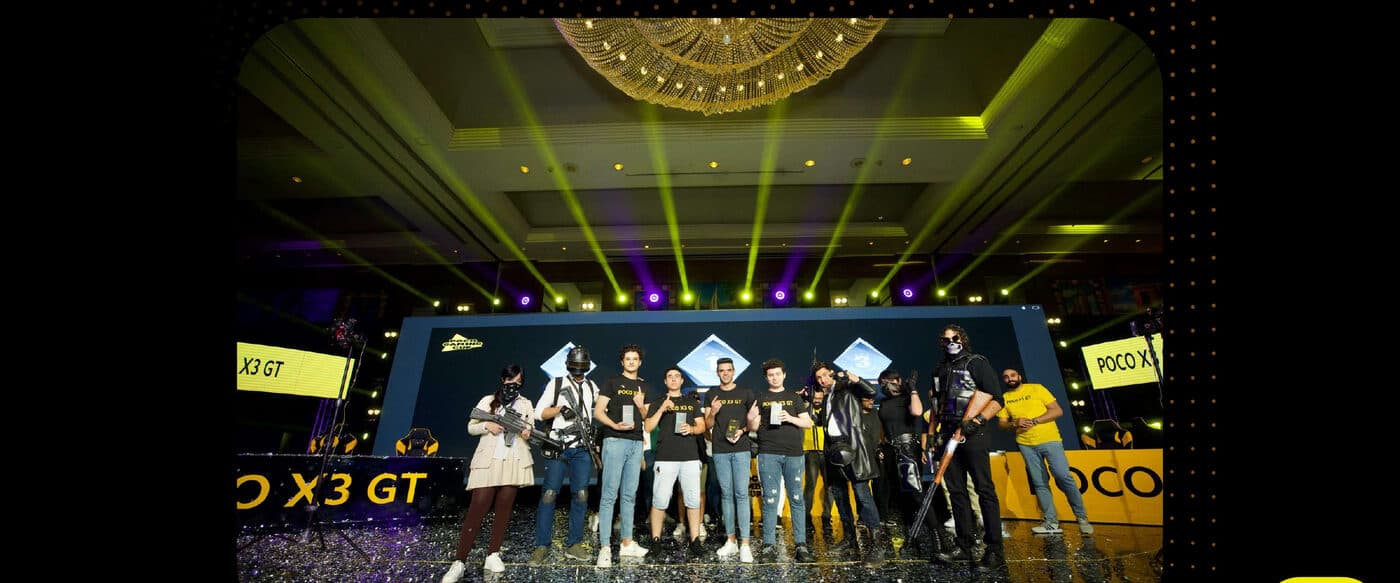
POCO X3 GT Gaming & Launch Event, Conrad Ballroom - 2022
"One of the Biggest TV Ad Productions in the Middle East"
A high-VFX cinematic TVC — the agency's own description, not a claim made for this platform — representing the ceiling of production value reached across the tenure.
"One of the biggest TV ad productions in the Middle East" — Xiaomi VFX TVC - 2021
Redmi 10C TVC Production
On location for the Redmi 10C commercial shoot — the same hands-on production involvement behind the VFX TVC above, this time visible directly rather than in the finished cut alone.
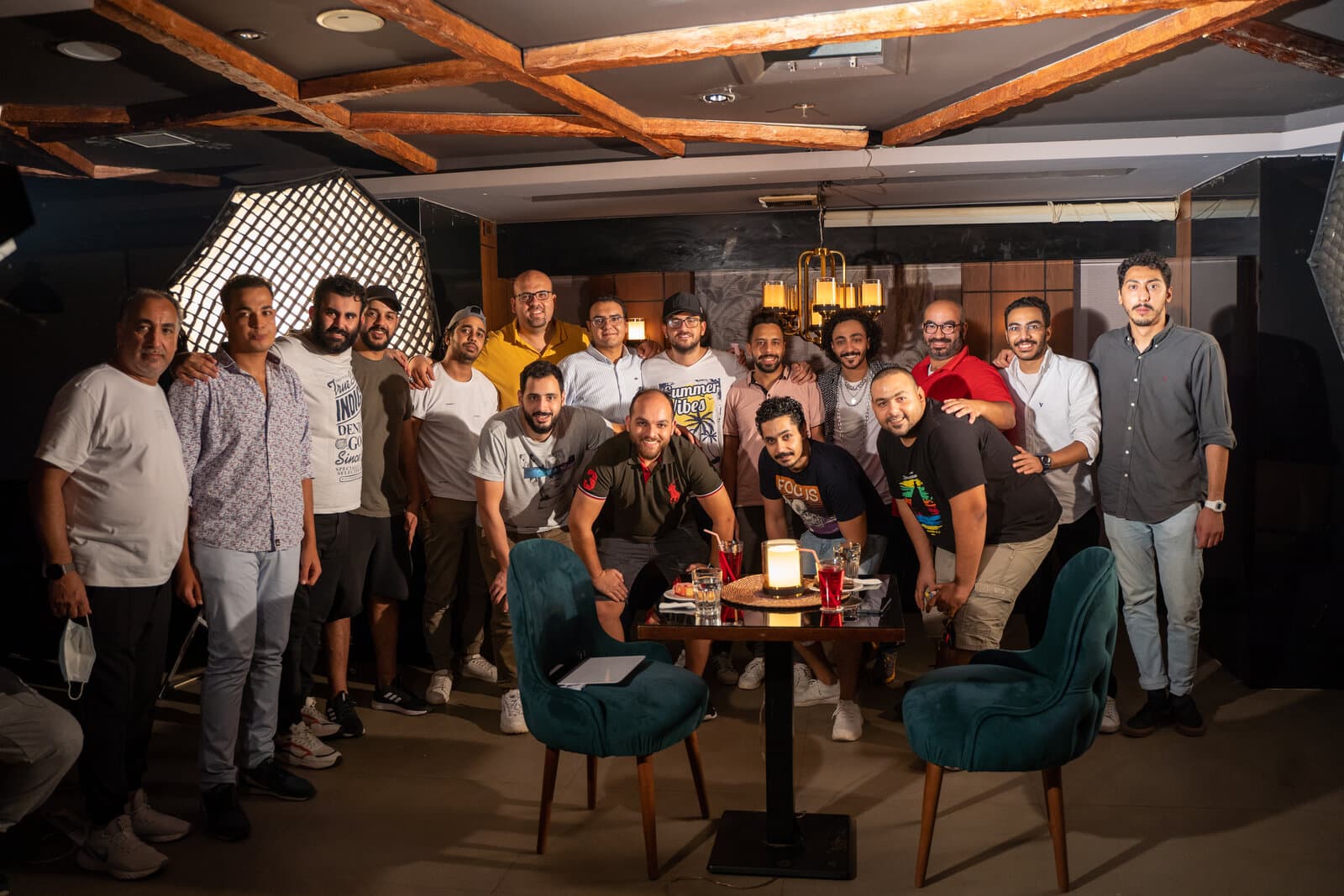
On set — Redmi 10C TVC production
Once the always-on foundation was in place, the same six years ran three product lines in parallel: Mi as the flagship, Redmi as the mass-market volume driver, and POCO as a distinct, younger, gaming-first sub-brand. Tamer Hosny's signing as brand ambassador in December 2020 — announced the same day the Mi 10T Series launched — became the anchor for the next two years of campaigns, from a full concert-style launch event to a three-part Ramadan TVC. Redmi's Sharmoofers-fronted "I Am Winner" campaign carried the mass-market message onto billboards, branded buses and metro takeovers nationwide, while POCO built its own gaming-first launch platform, culminating in an all-day event at the Conrad Ballroom. By 2021, a Xiaomi 11T Series launch event put the scale of that work on screen directly: "#2 smartphone brand worldwide," declared on stage.
Three tiers, three audiences, one playbook.
Running three product tiers at once works when each one earns its own audience — a celebrity ambassador for the flagship, mass-market OOH for Redmi, and gaming-culture ownership for POCO — rather than stretching one message across all three.
How did we sustain growth through disruption?
Two of the six years ran through a global pandemic and a national currency crisis — either could have stalled a growing challenger brand.
Adapt the format, not the commitment — move launches online during lockdown, reallocate budget during the currency crisis, keep the content calendar running regardless.
Every launch stayed on schedule through COVID-19, and daily activations kept growing — from 2,000 to 11,000 — through both disruptions.
- 2020Decision Under Pressure
Redmi Note 9 Online Launch During COVID-19
As in-person events became impossible, the Redmi Note 9 Series launch moved online — the same team, a different format, no missed date.
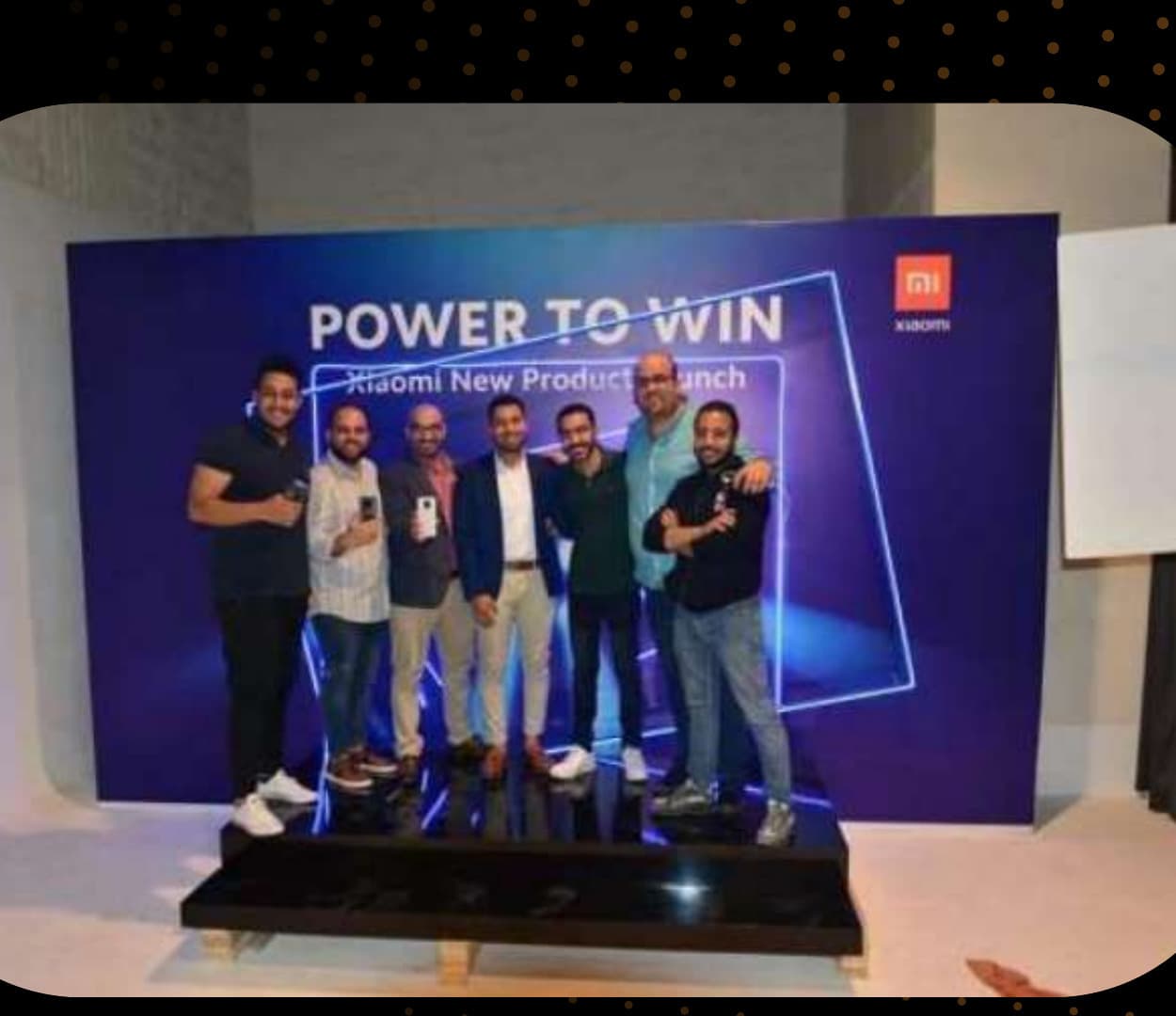
Redmi Note 9 Series — online launch during COVID-19 quarantine - 2021
Ramadan TVC with Tamer Hosny
A three-part Ramadan campaign built around Tamer Hosny, reaching an audience primed for family and community moments during the holy month.

Xiaomi Ramadan TV 2021 campaign with Tamer Hosny - 2022–2023Decision Under Pressure
Currency Crisis — Budget Reallocation
Egypt's currency crisis pressured marketing budgets nationwide. Sales targets were maintained through budget reallocation rather than a reduced program.
- 2022
Jumia B2C Activation
A retail push through Jumia converted into 15,000+ units sold in two days.
Two of the six years ran through disruption most brands would have used as a reason to pull back. When COVID-19 made in-person events impossible, the Redmi Note 9 Series launch moved online rather than being postponed — the same held true for the POCO F3 and Mi 11 Series livestream launches. When Egypt's currency crisis pressured budgets nationwide, sales targets were maintained through reallocation, not reduction. Ramadan campaigns kept running on schedule — a three-part TVC with Tamer Hosny in 2021, and organic reach exceeding 40 million in 2022 — and a Jumia retail push converted into 15,000+ units sold in two days. None of it was flashy; all of it was the same always-on discipline built in Building the Brand, tested under pressure.
Consistency is what survives a shock.
A brand program built on daily consistency survives a shock better than one built around a single annual campaign — the same infrastructure that ran always-on social let a product launch move online without losing a date.