
The decisions behind the launch — not the launch itself
Five real internal launch reports, spanning 2019 to 2020, read for the judgment they demonstrate — a repeatable planning methodology, a competitive posture chosen per product, channel decisions made per SKU, and the same underlying discipline held under a materially worse operating environment without losing performance.
A string of successful launches can look like luck, or like five isolated events, rather than one evidenced executive discipline.
Read five real internal launch reports — not for their reach numbers, but for the marketing decisions inside them: what got compared to a competitor and what deliberately didn't, which channel carried which SKU, and what changed when the operating environment got materially worse.
The same underlying discipline — plan in phases, hold a budget rule, measure honestly, adapt without abandoning the method — shows up in a 2019 flagship launch and a 2020 launch run under real pandemic constraint alike.
Launch Planning & Methodology
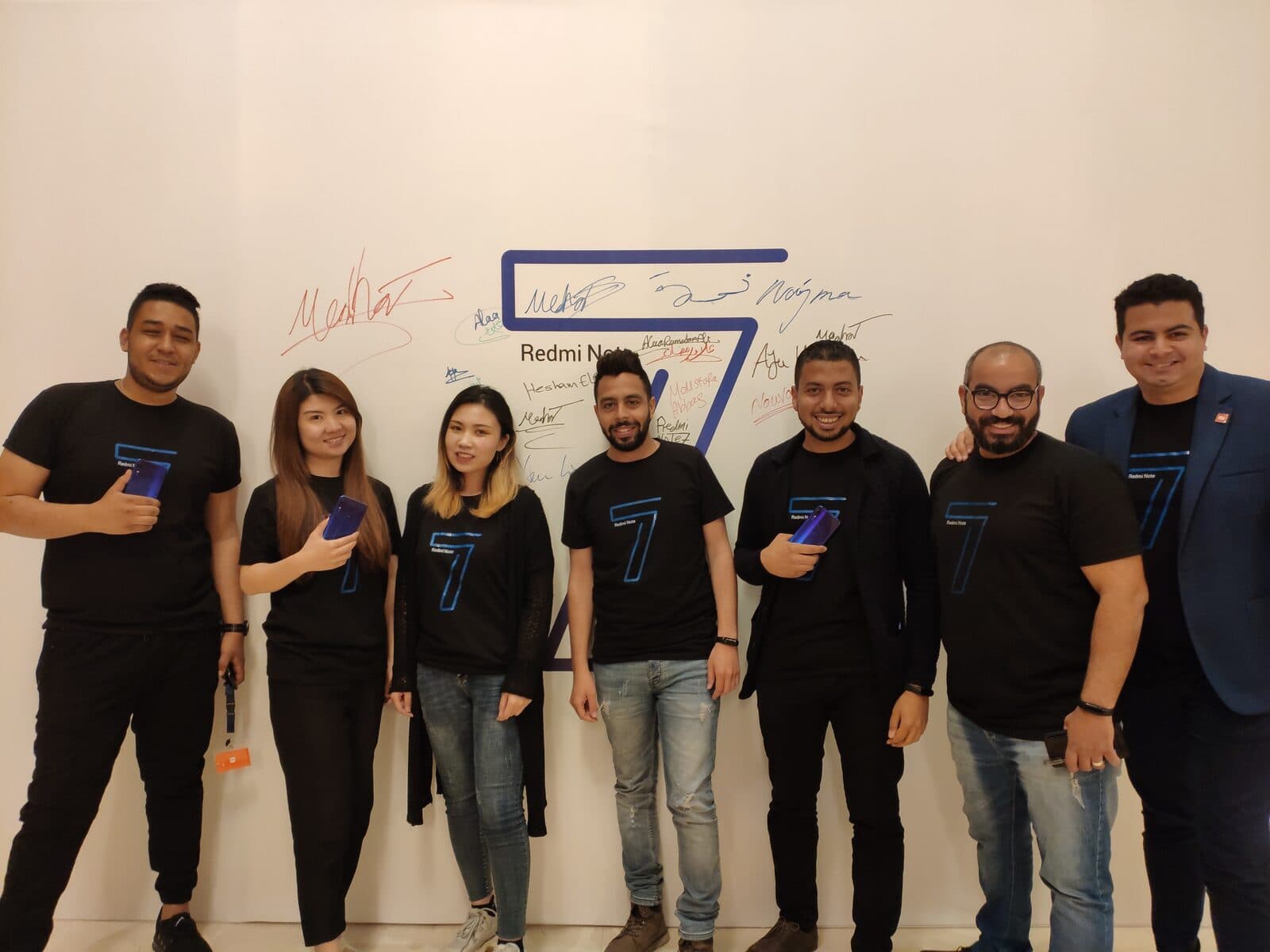
Every launch report read this session — Redmi Note 7, Mi 9T, Redmi Note 8 Pro, Redmi 9, Redmi 9C — follows the same three-phase structure: a multi-day Preheat teasing one feature at a time, a fixed Launch Day sequence (live stream → KSP summary → product video → pricing), and a Post-Launch sales push. What changes launch over launch isn't the framework — it's the reporting discipline around it, which visibly matures: Redmi Note 7's report has no competitive-context section at all; Mi 9T's adds one, plus a named retail-partner list; Redmi Note 8 Pro's adds Google Trends and click-tracking. This is a system being refined, not a template being repeated.
Competitive Positioning
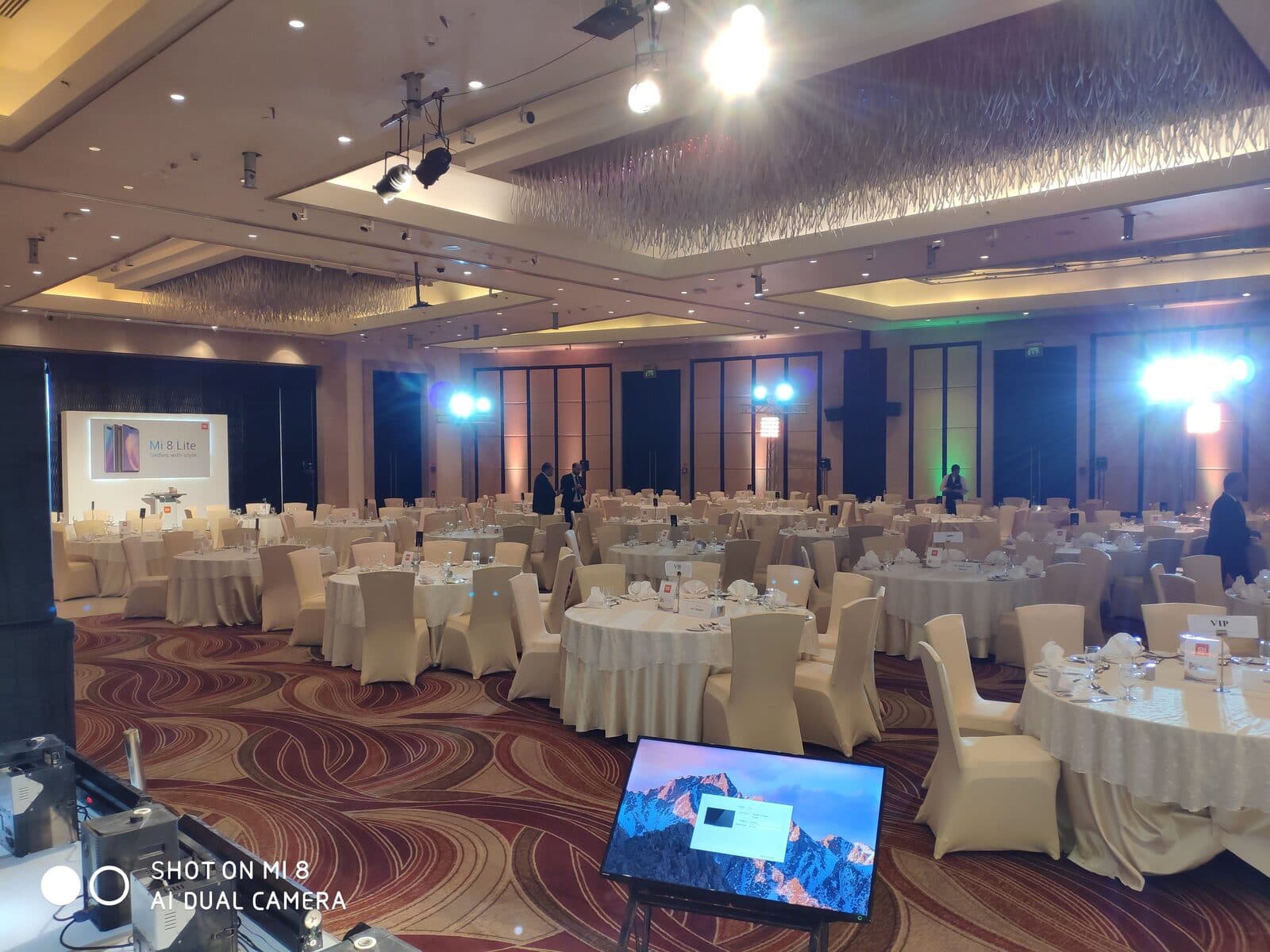
“Great value with honest price” — the closest thing to a written brand promise found in any of the five reports, the stated purpose of a paid, named comparison against the Samsung A80 and OPPO F11 Pro at Mi 9T's launch. Five months later, Redmi Note 8 Pro took the opposite posture on purpose: “Competitor comparison for Redmi Note 8 PRO was without any compare because no one can” — a confident refusal to compare, not a missed opportunity. The 2021 Rivalry Marketing campaign (four dedicated videos, 1M+ views each) and Tecno's SPARK Slim — a real competitive claim made years later with zero media budget — show the same instinct working at very different budgets. Two different postures, chosen deliberately by where each product actually sat in the market.

Go-To-Market, Channel & Segmentation Strategy
Retail & e-commerce
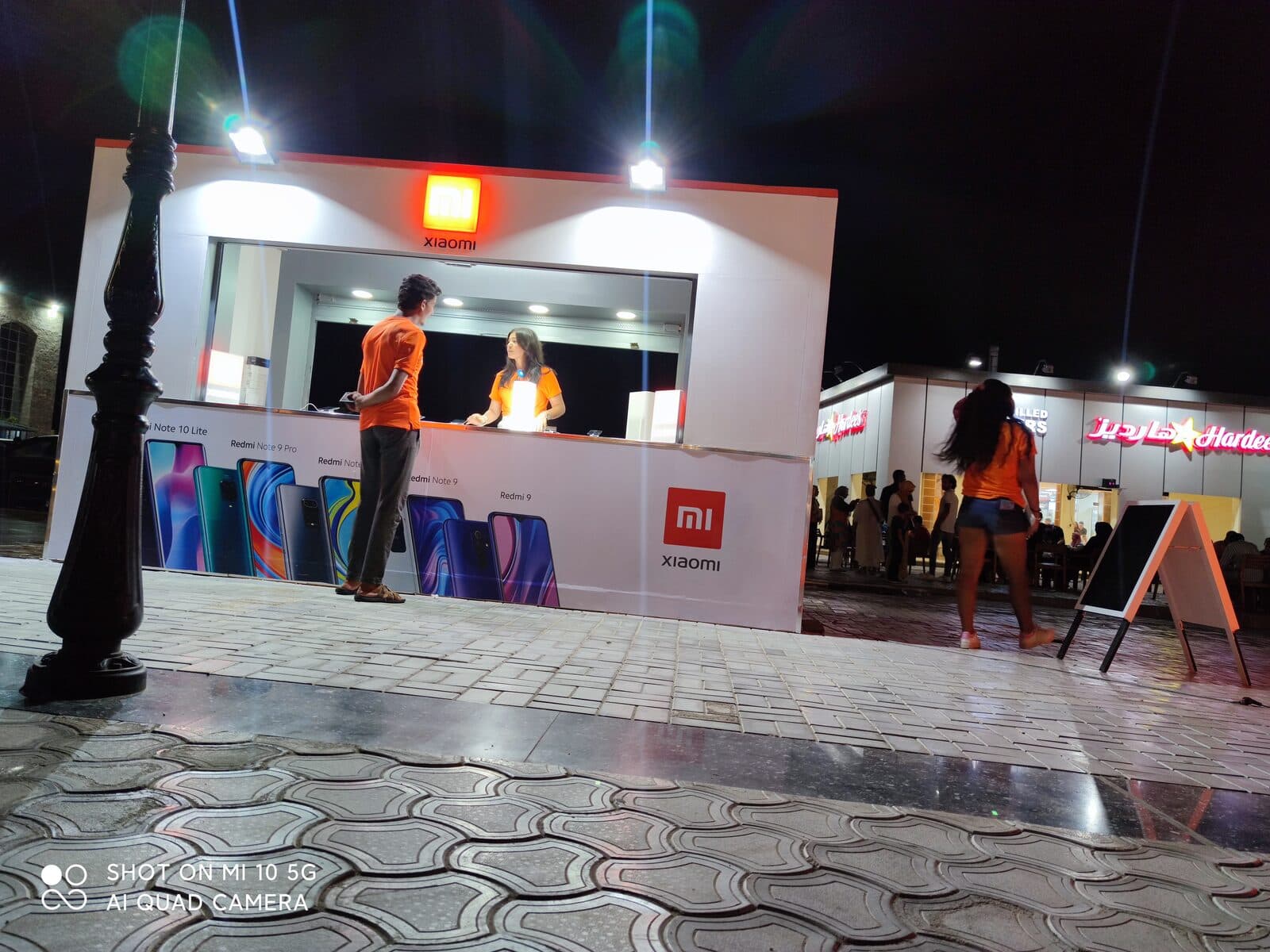
Mi 9T's 64GB variant sold exclusively on souq.com; its 128GB variant shipped only offline, through a named five-chain retail network (MobileShop, RayaShop, Union Store, K mobile, Sharaf DG) — while Redmi 7A, co-launched the same day for a different buyer entirely, ran its own noon.com exclusive. Different SKUs, deliberately different channels, decided at the same time.
Partnerships & ambassador programs
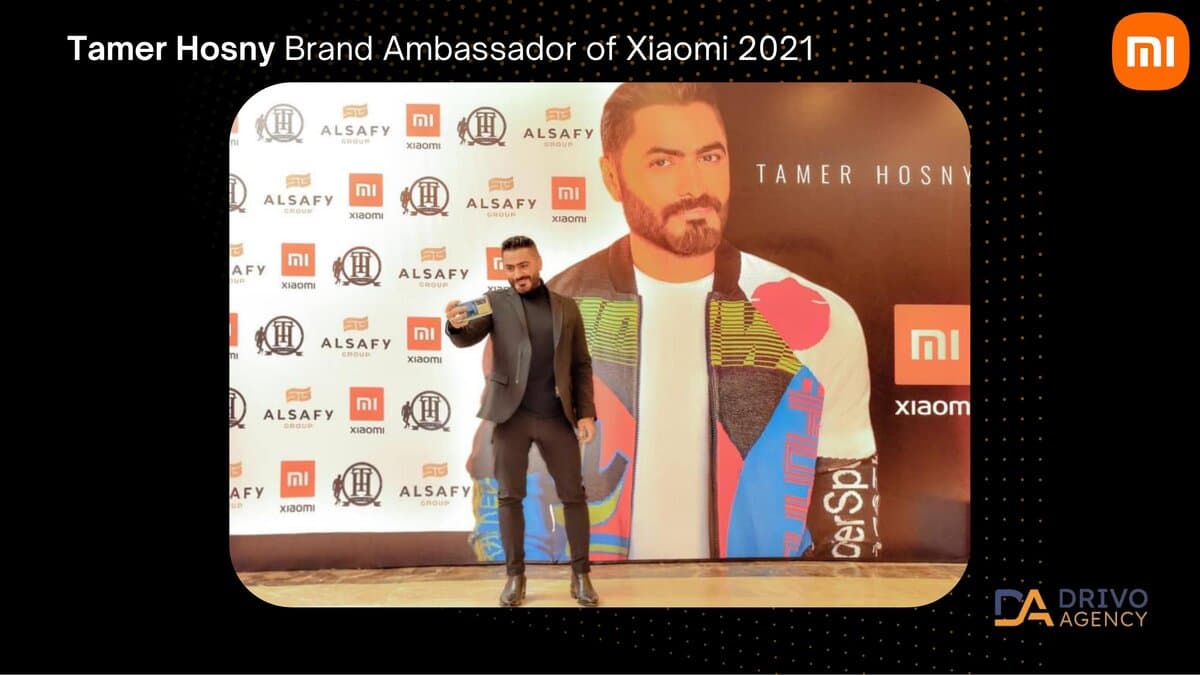
The 2021 Tamer Hosny relationship shows the same channel-design instinct applied to talent: a formal, ongoing Brand Ambassador program — a dedicated TVC and interview, not a one-off booking — is a partnership-structure decision, not just a media placement.
Segmentation-driven decisions
Segmentation here isn't a separate exercise from channel planning — it's the same decision. Redmi 9C's launch report states its segmentation objective directly: “More domination on low budget segmentation” — the clearest, most direct segmentation statement in any of the five reports.
Feature Communication & Product Education
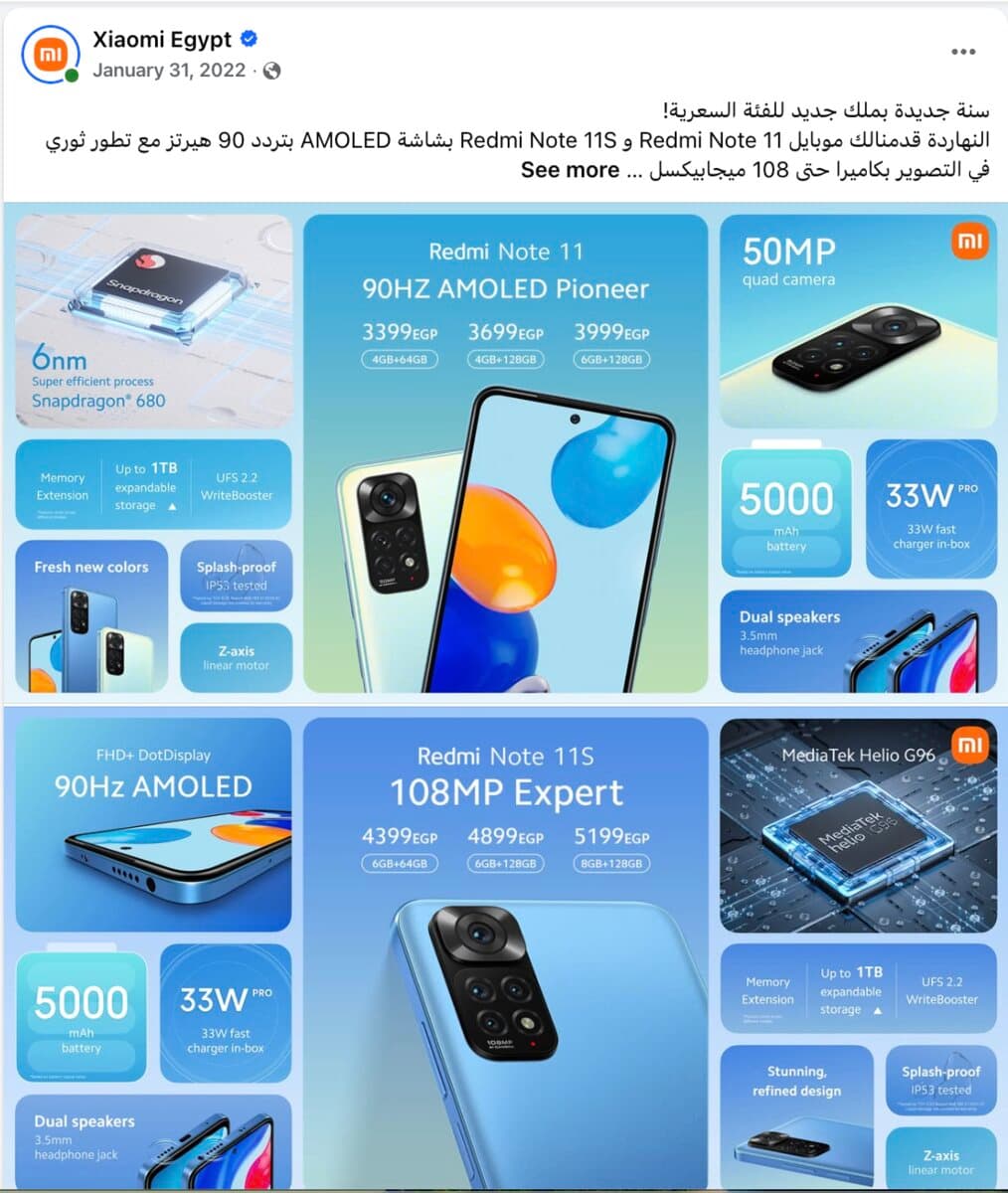
Every launch report uses the same KSP (Key Selling Point) system: one feature, one day, one dedicated teaser post, building to a single KSP-summary post at launch — the Redmi Note 11/11S post above is that exact format, live and dated. Redmi Note 7's launch went further, announcing the Xiaomi Photography Academy as a paid, launch-tied program (Mar 24, 2019) — a real product-education investment, not a retroactive framing. On stage, the same instinct showed up as live demonstration: POCO's Macro Mode toggled on and off in front of an audience, and a live AnTuTu benchmark reveal turned a technical number into a moment.
Adapting Under Constraint
The 2019 launches optimized for scale — competitor trend-jacking, tiered influencer seeding spanning twelve named reviewers, physical Gaming Hub venues. The 2020 launches, run under real pandemic constraint, did visibly less: leaner content, a repeated “gifts” loyalty mechanic, explicit segmentation targeting instead of broad reach. And yet Redmi 9C posted the highest engagement rate of any of the five reports — 9.1%, from the leanest content of the set. The same discipline held; only the tactics changed.
Two risks are named plainly in the record rather than edited out: Redmi Note 8 Pro's report admits “we had technical issue in youtube live stream 20 min before the event”; Redmi 9's report names a real cross-product risk — customer concern about a camera issue on the sibling Redmi Note 9 was affecting this launch's own reception. Both stayed in the internal record.
Business Results
Every figure here is read directly from the internal launch report that produced it — nothing is estimated or retyped as a new claim. The live-stream spend figures ($3, $1.5) are included deliberately alongside the reach numbers: their significance is the budget policy they represent across two separate launches, five months apart, not their size.
Product Marketing Playbook
- Treat measurement as a discipline to refine, not a template to repeat. The reporting format visibly matured launch over launch — competitive tracking, click-attribution, and a standardized KPI dashboard were each added, not present from day one.
- Decide budget rules once, and hold them. The live-stream moment ran at near-zero paid spend across two separate flagship launches, five months apart — a named policy, not a coincidence.
- Match the competitive posture to the actual market position. Compare head-to-head when challenging (Mi 9T); refuse to compare when leading (Redmi Note 8 Pro).
- Segmentation and channel strategy are one decision, not two. Every segmentation fact in this evidence is really a channel decision in different clothes — which SKU went to which platform, which price tier got which retail chain.
- Adapt the playbook to the constraint without abandoning the discipline. The COVID-era launches did less and performed better per unit of effort, because the underlying rigor — measure, target, follow through — carried over even as the tactics changed.